
Cultivate Gratitude on Thanksgiving: Nurturing Yourself, Quieting Stress

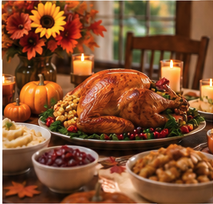
Thanksgiving is one of those holidays where we are instructed what to feel: Be grateful! Count your blessings! Savor what’s good! And, sometimes, everything does fall into place, and the day is a happy one to connect with loved ones, enjoy yummy food, and share laughter.
We’re reminded of the famous Thanksgiving painting by Norman Rockwell depicting Grandma serving a beautiful turkey with family and friends sitting around the table, broad smiles of delight on their faces. No one has an eating disorder, mom and dad are not getting divorced, and no one is feuding over politics or money. A perfect picture! A perfect Thanksgiving!
We all yearn for that perfect Thanksgiving with loving family and friends and the pleasure and safety of belonging. But, sometimes, real life just doesn’t measure up. And, let’s add, it often doesn’t measure up for many people. If that’s the case for you, you are not alone!
If you struggle with emotional eating, overeating, bulimia or body image concerns, the prospect of facing a large holiday meal may trigger the following worries:
- Pre-holiday concerns: Will Aunt Rose comment on my weight? How can I avoid this onslaught of food so it doesn’t trigger my eating disorder? Can I lose weight before the holiday? In extreme cases, these concerns can turn to dread, sleeplessness or even panic attacks.
- Holiday gathering pressure: Will Aunt Marge ask me if I’m finally dating? It can often be challenging to appear happy in front of your friends and family. This is magnified if you are conflicted over how much you will eat. People with body image-concerns are sometimes preoccupied with how they appear to others and what others are saying or thinking about them.
- Post Thanksgiving Day shame: No matter how much (or how little) you ate on Thanksgiving, the next day your mind may tell you that you did something wrong, triggering you to fast or binge to make those feelings go away.
Here are some supportive strategies to get through the day with kindness and self-compassion.
- The more people deprive themselves, the more likely they are to binge. It is often a better idea to partake of the beautiful Thanksgiving foods rather than risk overeating later from feeling deprived.
- Healing is not meant to be done alone, and that is especially true on a holiday. Reach out to your support people. If you have a counselor, speak with them beforehand. They will help you stay centered. Pick one person who knows what you are going through. It might be a partner, a sibling, a friend, or a cousin you trust. Tell them what would help. Maybe it’s sitting next to you, changing the subject when food talk starts, or checking in with a simple text during the meal.
- Give Yourself an Exit Strategy
It is perfectly fine to step away. A walk around the block, a few minutes breathing fresh air, or a quiet moment in another room can help you reset when emotions run high. Some people find it helpful to arrive a little later or leave a little earlier, and to drive by themselves or Uber so they are in control of their timing. Knowing you can leave often makes it easier to stay! - Find Room for Gratitude:
If thoughts about food are holding you hostage, turn the tables and remember reasons to be thankful! It can help to make a list of the things for which you are grateful. Tell others what you are thankful for and show gratitude toward them. - Self Care Planning
- Rest
- Exercise
- Meditate
- Make plans with people for the balance of the weekend
- Read that book you never have time to read
- Watch enjoyable and engrossing movies
- Go to a spa – get a facial, hot stone massage, mani/pedi
- Treat yourself to a Broadway show
- Emotional self-care
Resist the impulse to compare yourself to others. As the 12 Step Programs say, “Compare and Despair!” Have you noticed that we only compare ourselves to those we rate as superior to us? Of course, what we’re doing is comparing their polished outsides to our at times lonely and self-critical insides.
We need to challenge that self-sabotaging inner critic and remember we are doing the best we can with the cards we have been dealt.
People only change through self-acceptance and as they learn to become as kind to themselves as they are to others.
Joanne Gerr is a psychotherapist in Manhattan and Highland Park, N.J. She specializes in working with individuals, couples, and families on issues related to food/weight/body image, communication difficulties, anxiety, and seasonal affective disorder. Joanne will help you attain your personal goals through an individually designed treatment plan. We will work together as a team to help you have a more serene, joyful life with less anxiety or conflict.
In addition to her practice, Joanne has appeared as the psychotherapy expert on national television and radio. She lectures to professionals and the public in a variety of settings including Harvard University, School of Public Health as well as teaching at the University of Michigan where she was the recipient of The University of Michigan scholarship and won a National Communal Service Award for programs she developed for students and the elderly. She has presented at professional conferences including The American Psychological Association and The National Association of Social Workers. Joanne has also lectured for the 92 Street Y, Celebrity Cruise Lines and Canyon Ranch Spa in Massachusetts and Arizona. She continues postgraduate training at Harvard Medical School’s Department of Psychiatry.
Joanne would be delighted to hear from you.
Phones: 212-750-8130 or 732-247-5112
Text: 917-301-5244
Email: joannegd@gmail.com